
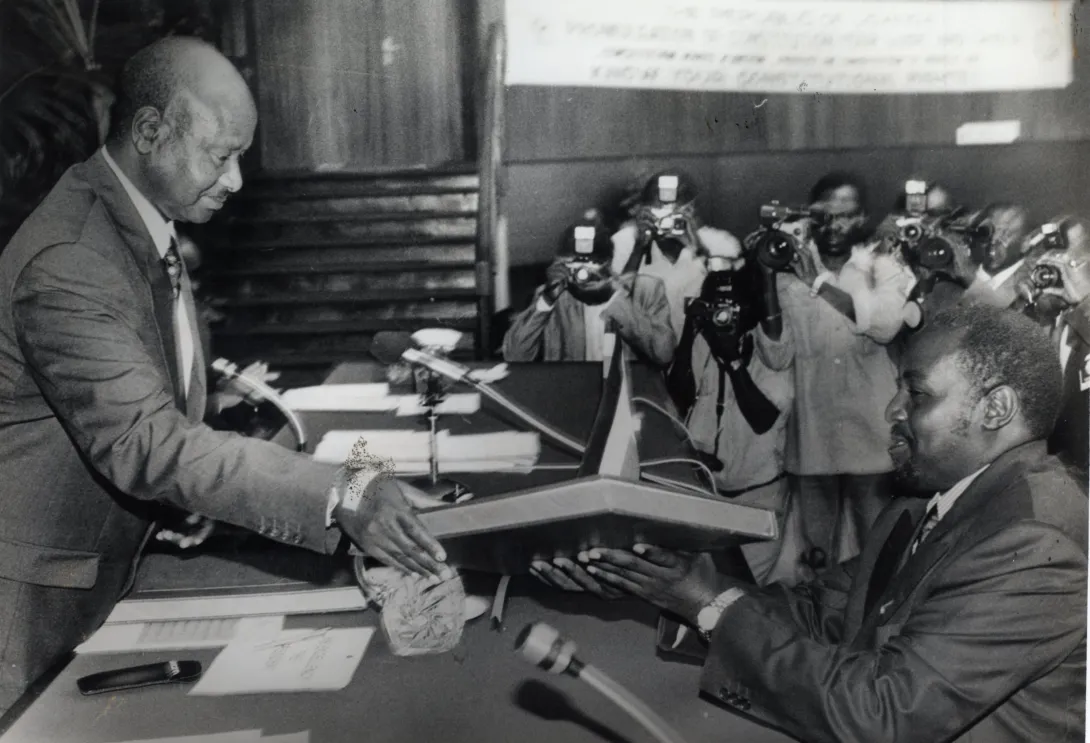
In 1993, President Yoweri Museveni under National Resistance Movement (NRM) initiated the process of drafting a new constitution to promote peace, stability, and democracy. The Constitutional Commission led by Benjamin J. Odoki, drafted the new constitution, then the Commission conducted public consultations across the country, seeking input from citizens, interest groups, political organizations, and traditional leaders.
The draft was debated and eventually approved by the Constituent Assembly in 1995 and the Constitution of Uganda was officially announced on October 8, 1995.After years of political instability, including military coups and political instabilities. Uganda needed a permanent legal framework to guide governance and protect citizens’ rights.
This marked the beginning of a new legal and political framework that emphasized democracy, human rights, and rule of law.
Key features of the 1995 Constitution include a well-built Bill of Rights, ensuring freedoms such as speech, assembly, and equality before the law; a clear separation of powers among the executive, legislature, and judiciary; and decentralization of governance and promoting citizen participation at the local level among others.
The 1995 Constitution has played a crucial role in stabilizing Uganda, fostering citizen involvement in governance, and serving as the supreme law guiding all government action. It remains a testament to the country’s efforts to build a just, democratic, and accountable society